Strategic Expansion
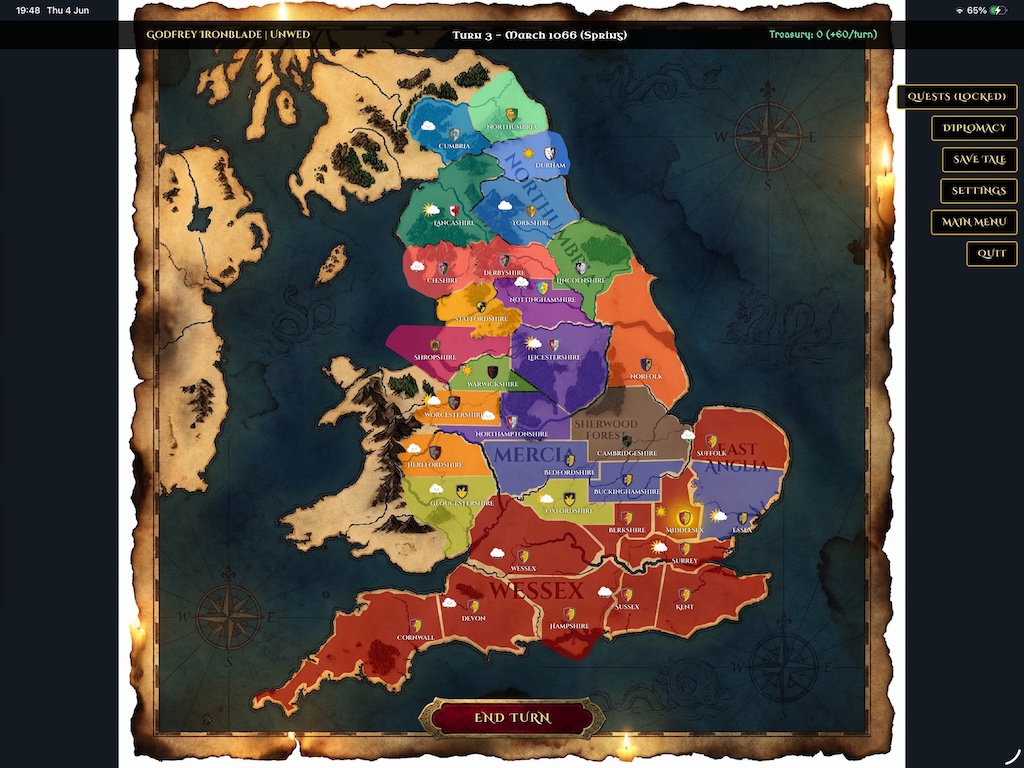
Conquest follows a classic, Risk-based approach. You command armies across a divided map, claiming adjacent territories to expand your borders. Rather than moving troops peacefully between friendly territories, your armies are permanently stationed where they stand. To attack a rival province, you must launch your invasion from a bordering territory that you already control.
Garrison & Rebellion
Ruling a kingdom requires an iron grip. A skeleton garrison is not enough to maintain order in newly conquered lands. If you leave a territory with fewer than three soldiers stationed to guard it, the local peasantry will grow bold, and their loyalty will rapidly deteriorate. If loyalty reaches zero, a violent rebellion will spark, overthrowing your rule and replacing your forces with a hostile rebel militia.
The War Machine
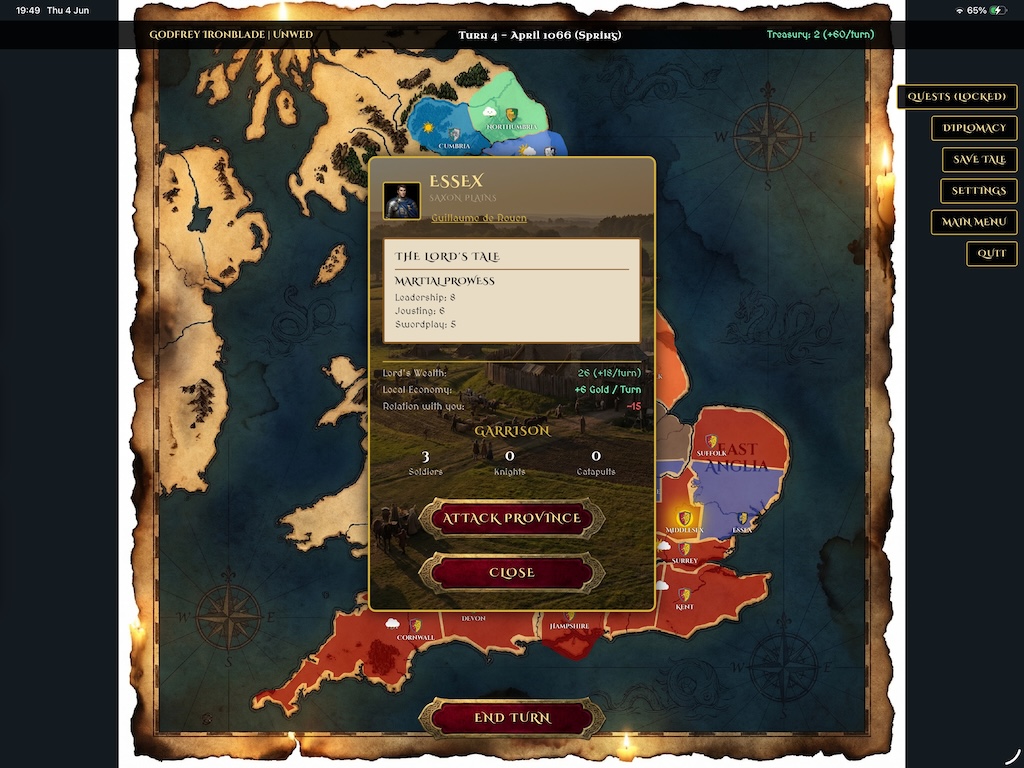
A true king must balance the royal treasury with military might. Gold is the lifeblood of your empire, generated each season by the territories you hold. With this gold, you can recruit three distinct types of forces to bolster your garrisons or lead your invasions:
- Soldiers: The backbone of any army. Cheap, reliable infantry necessary to hold territory and prevent rebellions.
- Knights: Elite heavy cavalry. Expensive, but their devastating power in open combat can break the lines of far larger infantry forces.
- Catapults: Essential siege engines. Useless in a skirmish, but absolutely critical for shattering fortified castle walls before an assault.
Diplomacy & Espionage

Expansion is not just won with swords. A wise ruler leverages the political map. You can dispatch envoys to offer gold to rival lords, securing Non-Aggression Pacts to safely turn your back on them, or deploy your spymaster to sabotage their fortifications before you march.